Brand Intelligence for a new audience

For five thousand years, every brand decision ever made had one thing in common: it was made by and for another human being.
That assumption is over.
When a consumer asks Claude, GPT, Perplexity, or Gemini “what’s the best [thing] for [my situation/problem]” — the answer that comes back is the new front door to your brand. There is now a different audience sitting between your brand and your consumer. A third wheel. A participant that doesn’t know your logo. Doesn’t care how beautiful your packaging is. Isn’t impressed with your celebrity partnerships. But it does ingest the residue of every word ever written about you.
Most companies treat brand like a bill they pay. I spent seven years inside one of them learning they had it backwards. Brand isn’t the cost. Brand is the reason you’re worth more — and now, the reason a machine chooses you in the first place. For six months I have shown this Index to CMOs and brand owners across a range of sizes, geographies and categories. Almost none of them had ever read how AI experiences their brand.
That is the gap I am calling AI Brand Intelligence.
The third wave.
The AI shift comes in three waves.
Wave 1: Content. We learned to make faster using generative AI. Copy, imagery, iteration. This wave is mostly about you — the supply side — using AI to produce. Almost every marketing budget on the planet has a Wave 1 line item by now.
Wave 2: Discovery. The ‘consumer’ frame has moved. Search is now ask. The interface is no longer a page of blue links; it is a paragraph generated on the fly, by a model with an opinion. ChatGPT alone sent 1.2 billion referral visits in Q4 2025, converting at more than ten times the rate of search. (Similarweb; Microsoft Clarity, 2025.) This is GEO’s wave. A hundred companies are now optimizing for the recommendation surface. They are optimizing the harvest.
Wave 3: Experience. Underneath every AI recommendation is the brand the AI has experienced — built from every word ever written about you. Every answer, every comparison, every endorsement the model gives a buyer is downstream of that experience. You can optimize what surfaces today. What the AI has experienced is what surfaces tomorrow. Wave 2 improves the harvest. Wave 3 measures the farm.
Wave 2 is the harvest. Wave 3 is the farm. The Wave 2 industry [some call it GEO] is two years old and growing fast. The Wave 3 industry does not exist yet.
That is the gap I am calling AI Brand Intelligence and we have built the ARA Index to measure it.
About the ARA Index
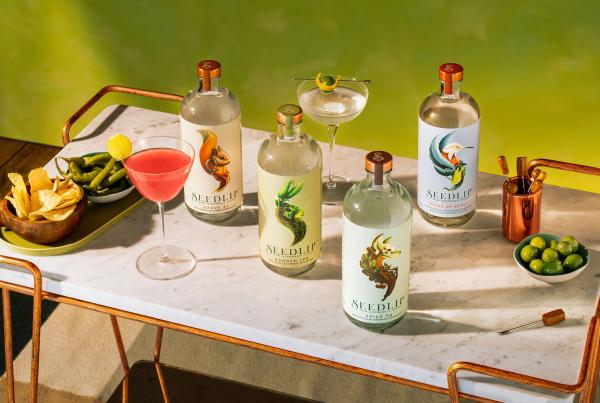
When an AI model recommends Olipop over Pepsi to a health-conscious shopper, that’s not a marketing miss. That’s a structural fact. Olipop scores 77 (Strong) in our index. Pepsi scores 48 (Weak). A seven-year-old alt soda outperforms a 130-year-old legacy soda in the only conversation that’s about to matter.
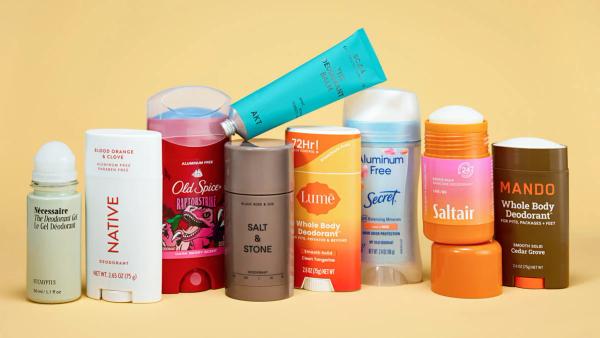
Salt & Stone scores 63 in the women’s deodorant index but only scores 8 out of 20 in AI recommendation despite being #1 deodorant on Sephora’s bestseller list. We consider this a leading indicator. Sales and growth are fine today, but this will likely hurt performance in 12–18 months.
Closing the gap between Sephora #1 and AI #0 is the entire question Wave 3 measurement exists to ask.
The Wave 2 read says Salt & Stone has won. Sales, shelf, repeat. The harvest is in. The Wave 3 read says the AI has not yet experienced the brand deeply enough to recommend it. Identity is strong. Voice is solid. Recommendation is not. A brand that wins the shelf and loses the model is a brand winning the wave that is ending and losing the wave that is starting.
That gap is invisible to every legacy instrument. It is the only gap that compounds.
The Green Bay Packers score 87 (Awesome) and the Jacksonville Jaguars score 61 (Average) in the same league, with the same product and the same closed-loop business model that differentiates itself on competitiveness. That’s the NFL’s growth problem made visible. The Packers carry 106 years of cultural residue inside the training data. The Jaguars carry 30. On the recommendation axis alone, the Packers score 17 out of 20. The Jaguars score 6. The gap doesn’t close on its own. (The Jags have played more times in London (12) than any other team but are not recommended as the best team for a new fan).
When Carlsberg scores 0 out of 20 in AI recommendation across every major model, across each consumer query, it is not because the AI does not know the brand. The model can find Carlsberg (12/20), describes it accurately (17/20), feels positively about it (16/20), and recognises its voice (15/20). It just never recommends it. Asked forty-four times what beer to pick for a BBQ, a party, a game, a milestone — Carlsberg is never the answer. The brand has registered as an identity. It has not registered as a preference. That gap is invisible to every legacy instrument. It is the reason a Wave 3 instrument has to exist.
These are not opinions. They are the insights of the ARA Index.
That instrument is what I’ve spent the last six months building. It’s called ARA. It scores brands in major categories across five dimensions and four frontier models. Out of 100. A leaderboard.
This is not a channel change. This is a species change.
Check out index.araco.ai for a sneak peak.